
 NL
NL  HU
HU  EN
EN  DE
DE
The current agricultural system largely serves as a business model for companies that sell fertilizers, pesticides, and other agricultural chemicals.
I came to this conclusion after seriously studying various agricultural methods.
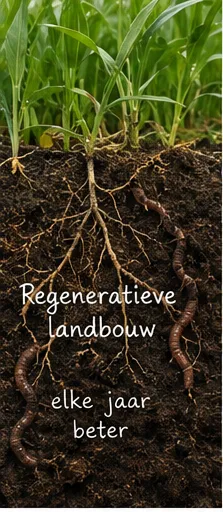
Regenerative agriculture ensures that the soil does not become further depleted after each harvest. Instead, it becomes increasingly fertile through the growth of microbial life in the soil.
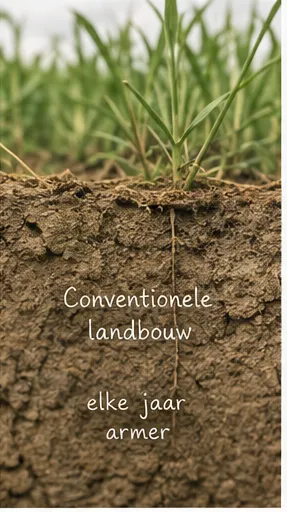
Experts such as John Kempf, Christine Jones, Elaine Ingham, and Glen Rabenberg help farmers around the world transition from conventional to regenerative agriculture.
John Kempf alone has helped more than 1.5 million hectares of farmland make this transition.
This approach is being adopted on a large scale because it often provides financial benefits to farmers from the very first year. Not only are the costs of fertilizers, pesticides, herbicides, and other inputs significantly reduced, but it also saves considerable time and labor.
After several years, higher yields become the rule rather than the exception, while crops become increasingly less dependent on external inputs.
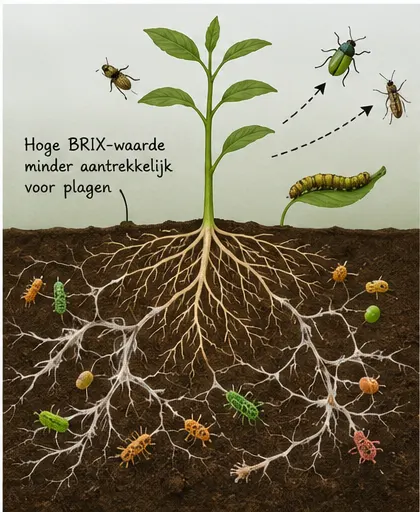
An important principle is that healthy plants are more resistant to diseases and pests.
According to John Kempf, the BRIX value plays a role in this. BRIX is a measure of a plant’s sugar content. When BRIX levels are sufficiently high, plants become less attractive to insects and other harmful organisms.
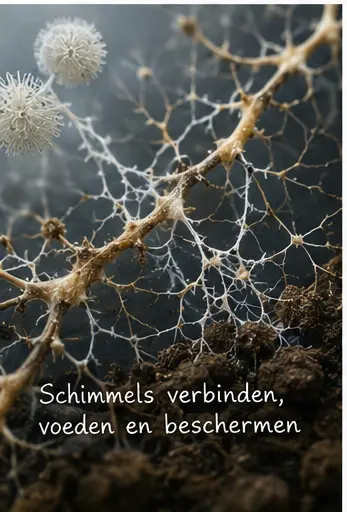
Weeds can also be largely controlled through natural processes. A healthy soil ecosystem, and particularly a well-developed fungal network (fungi), plays a crucial role.
Fungi not only improve the availability of nutrients such as potassium but also support crop growth in competition with unwanted plants.
Elaine Ingham emphasizes the importance of active soil biology and demonstrates how farmers can better understand their soil by using a microscope. Christine Jones highlights the importance of biodiversity: different crops and plant families stimulate a greater diversity of microorganisms than monocultures.
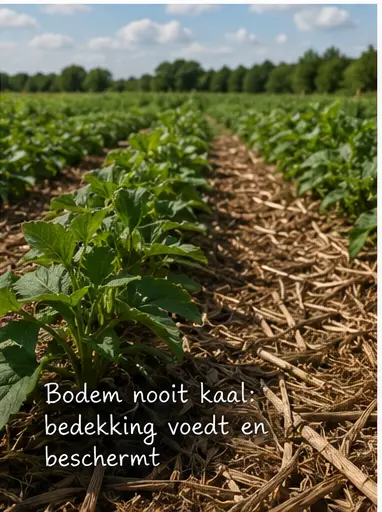
In addition, these experts stress that soil should never be left bare. Living ground cover or a mulch layer keeps soil life active and protects the soil from drying out and erosion.
At RASBO Genetikaï Heritage (Genetic Heritage), we have a strong interest in healthy plants and living soils.
That is why we study these subjects extensively and apply these insights wherever possible within our own practices.
With this information, we hope to give you a better understanding of our vision and our products.
Do you find this topic interesting? Let us know. If there is sufficient interest, we will gladly share more knowledge and experiences in future blog articles.
Thank you for reading.
Warm regards,
Bo Hof
RASBO Genetikaï Heritage